MyToolVault
Fourteen focused web tools on one shared platform, covering time, notes, podcasts, planning, printable puzzles, and everyday routines.
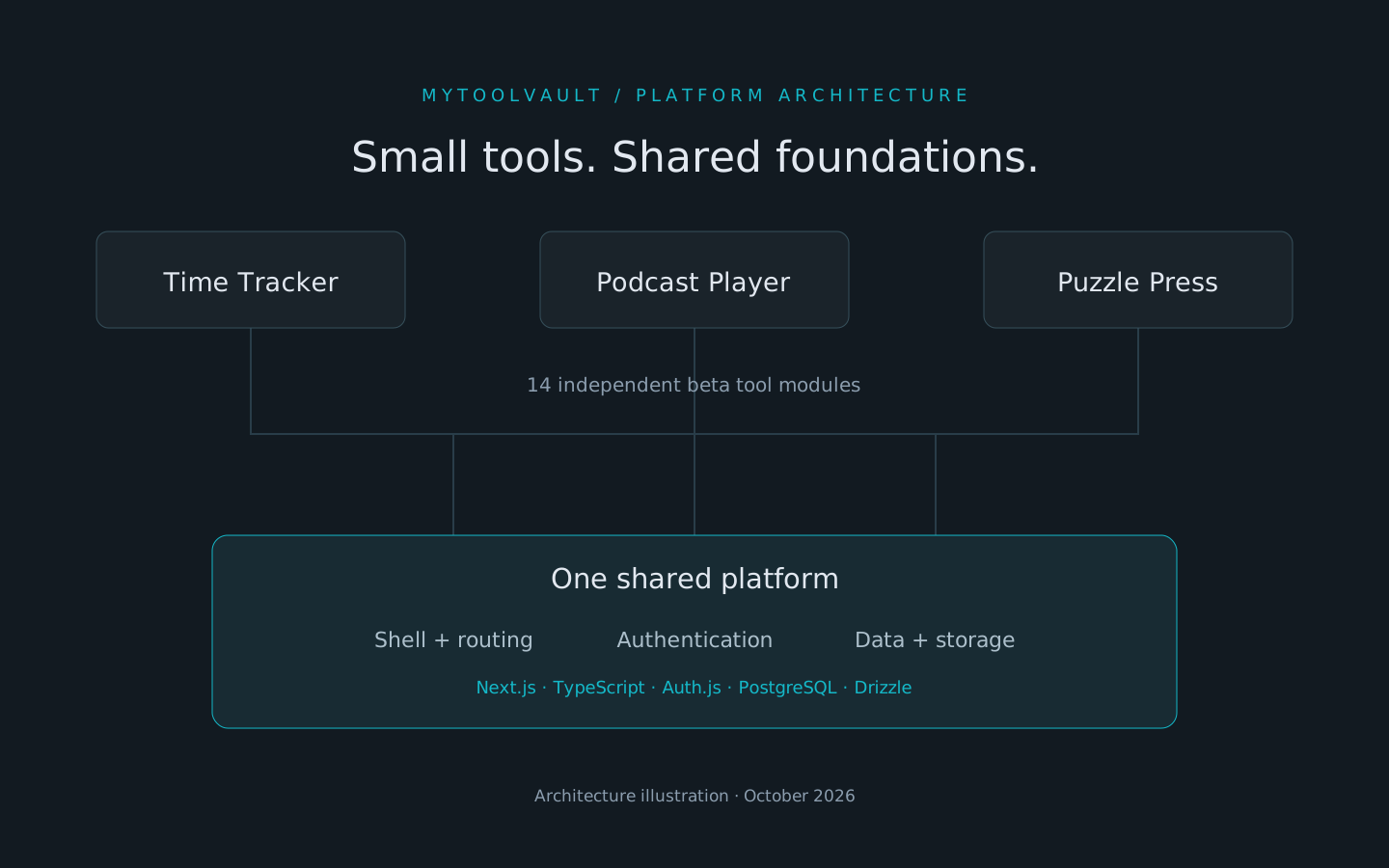
MyToolVault is a private collection of web tools I build around practical needs. A time tracker, a podcast player, and a printable puzzle maker solve very different problems. They share enough infrastructure that it makes sense to build them together.
Above: an architecture illustration based on the repository, not an application screenshot. MyToolVault requires an account.
The problem
Small tools are useful precisely because they stay focused. But each one still needs routing, navigation, account access, data storage, and a way to ship updates. Repeating that work for every idea adds overhead before the interesting part even begins.
My role
I create the individual tools and the platform they run on: product scope, interfaces, data models, and the implementation behind each workflow.
One platform, fourteen focused tools
The tool registry contains 14 beta modules as of October 19, 2026. They include Time Tracker, Podcast Player, Budget Planner, Knowledge Vault, Puzzle Press, and Daily Two Do, alongside tools for family and community routines.
Explore the complete tool inventory.
A few ways the tools work
- Time Tracker: organize hours, PTO, and invoices around the work being tracked.
- Podcast Player: subscribe to shows, queue episodes, and resume listening.
- Knowledge Vault: capture personal knowledge notes and retrieve them later.
- Puzzle Press: turn a supplied word list into printable word searches and fill-in puzzles.
- Daily Two Do: capture tasks and turn them into a focused daily list.
These are separate product workflows inside a common shell. The personal Knowledge Vault module here is distinct from the older team knowledge project elsewhere in this portfolio.
Decisions that keep the suite manageable
Make each tool a module
Each tool lives under its own module directory. A central registry supplies the name, route slug, description, version, status, and visual identity. Shared routing can then resolve the right tool without turning the platform into a separate application for every idea.
Share the infrastructure
Next.js and TypeScript provide the application foundation. Auth.js handles authentication; Neon PostgreSQL and Drizzle support persistence. A shared shell and UI components give the tools a consistent starting point while leaving room for their individual workflows.
Track maturity per tool
The registry records versions and beta status independently. The tools can evolve at different speeds while the common platform continues to serve them. The repository also includes Vitest and Playwright checks.
What is delivered
Fourteen registered beta tools, a shared authenticated platform, and a modular structure for adding the next one. This is a concrete example of building reusable infrastructure while keeping individual products small and understandable.
The count describes implemented modules, not fourteen separate businesses or a claim about user adoption.
See the skills behind the platform or get in touch to talk through a similar collection of workflows.